Chapter 10 - Exercise
This chapter is from the book given at diagnosis by your clinical team at Perth Children's Hospital. It covers the benefits of exercise, the considerations of exercising with type 1 diabetes, effects on blood glucose levels, planning, and strategies for exercise.
Chapter 10: Exercise
Exercise Overview
- Diabetes should not stop children participating in any sporting activity and there are many top athletes with type 1 diabetes
- All people with type 1 diabetes should do at least 60 minutes of exercise every day
- Measure GL before, during and after exercise
- Exercise usually lowers blood glucose levels (GL)
- Delayed hypos can occur after strenuous exercise
- Plan ahead before exercising, which may require lowering the insulin dose, eating carbohydrates or both
- Exercise safely, drink plenty of water and use sunscreen outside
10.1 My child has just been diagnosed with diabetes - is it OK to exercise?
It is more than OK. Taking part in regular exercise and physical activity is a very important part of managing diabetes and maintaining good overall health in childhood and into adulthood. It is recommended that children and adolescents do 60 minutes or more of physical activity every day.
The activities can be in smaller sessions e.g. 30 minutes of football and 30 minutes of walking.
10.2 What are the benefits of exercise?
Physical activity is an extremely important element of normal healthy childhood development for all children. In type 1 diabetes, physical activity improves cardiovascular health, strength and fitness and also reduces insulin requirements, improves glycaemic control (HbA1c) and blood lipid profiles. Exercise also has psychological and psychosocial benefits, such as improved quality of life and wellbeing. Exercise makes you feel better, more energetic and is good for your general health.
10.3 What type of exercise is best?
Any exercise is good. It is better to do some exercise than no exercise at all. In babies and young children, general activity and play provide exercise. This can include running, jumping, bouncing on trampolines and climbing. Older children and adolescents should be encouraged to be involved in group or individual sports, and incorporate exercise into their daily routine. This includes activities such as organised and competitive sport, swimming, jogging and cycling. It is important to include a combination of cardiovascular and resistance activities into physical exercise.
10.4 Does exercise pose any risk to people living with diabetes?
Exercise does not pose risk to people with diabetes and it is very important to participate in some form of exercise every day. However, it is important to be aware:
- That exercise can cause low GL
- That lowering of glucose levels following exercise can occur up to 24 hours after exercise
- The best way to avoid hypoglycaemia is to regularly monitor and check glucose levels before, during and after exercise. CGM is very helpful for exercise
- You need to plan for exercise with ready access to carbohydrate, hypo kit and blood glucose meter
10.5 Can my child still play contact sport?
YES. Please encourage your child to continue to participate in contact and team sports or to join teams.
Insulin pumps may be disconnected for contact or watersports but it is important to remember that disconnection should not exceed two hours (as there is a risk of developing diabetic ketoacidosis when insulin is withheld). Please talk to your diabetes team about basal/bolus modifications prior to or during exercise or wearing pump-specific clothing.
10.6 Supervision
It is important to let supervisors (teachers, coaches) know that your child has diabetes and that carbohydrate snacks, a drink, hypo kit and the blood glucose meter are located nearby. Provide them with simple instructions if a problem should arise. A companion (relative, friend) who understands diabetes and hypo treatment should always be around for activities such as surfing, bushwalking or hiking, snorkelling or scuba diving, sailing, skiing etc. These sorts of activities require careful planning.
10.7 When to avoid exercise
- When you are unwell
- When GL is low (<5mmol/L)
- When ketones are present (>0.6mmol/L)
10.8 How does exercise affect GL?
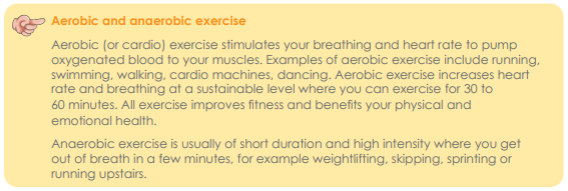
Generally, exercise will lower your GL (during and after exercise). This is caused by:
- The body uses glucose as fuel. Exercise requires our muscles to contract to run, jump, push, pull, climb or throw which requires a lot of energy. Muscles get energy from stored glucose in muscle cells, or by absorbing glucose from the blood with help from insulin. Once you have finished exercise, the muscles then need to recover and get their energy back. Muscles absorb glucose out of the blood and back into their cells with reduced insulin requirements after exercise. GL can be lowered up to 24 hours after exercise.
- During exercise, our body becomes more sensitive to insulin and in the hours after exercising the insulin in your system works better at removing glucose from the bloodstream.
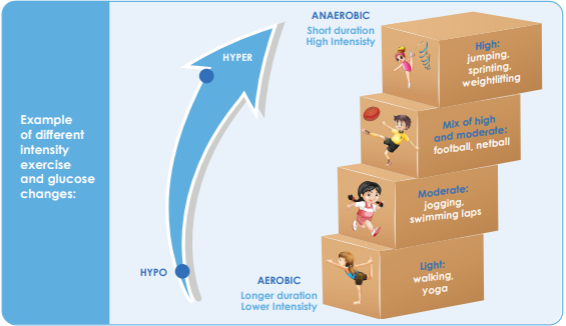
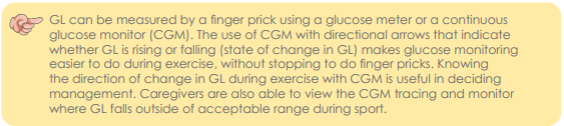
In some cases, exercise can cause an increase in glucose levels. This is caused by the release of a hormone called adrenaline resulting from excitement or stress. Generally, this occurs when someone is performing intense (anaerobic) or competitive exercise. This is usually short lived, with GL returning to target range without requiring extra insulin.
Delayed hypoglycaemia after exercise
If you have been exercising for long periods, or very intensely, then delayed hypos may be likely. Muscles can continue to use more glucose and the body remains more sensitive to insulin. Hypos can be prevented by reducing insulin, eating extra carbohydrates and extra GL testing. Test GL after exercise and before bed. It may be necessary to check your GL overnight.
Exercise affects everyone differently
To gain an understanding of your glucose response during exercise, it is important to keep a record of the types of exercise you do, and your GL. Everyone is different in terms of fitness and ability and will have their own individual responses. Monitor your GL carefully to look for patterns and learn how your body responds to different sports and your individual diabetes management requirements.
10.9 Planning for exercise
When you are exercising, be sure to have the following at hand:
- Hypo treatment
- Glucose meter / testing instrument (even if you are on a CGM)
- Strips
- Finger wipes
- Carbohydrate snack
Most exercise and activities lasting longer than 30 minutes will require insulin adjustment and/or food.
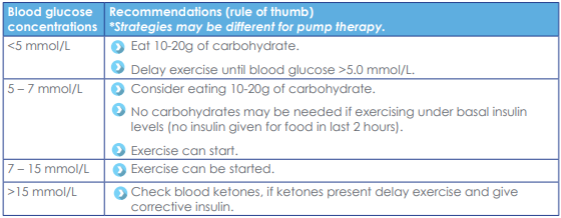
- Check your GL before starting exercise and consider the guide below:
2. Injection sites
Insulin will be absorbed quicker from parts of the body that are involved in exercising, like the arms or legs. It is recommended to inject insulin in the tummy area or the buttocks before exercising.
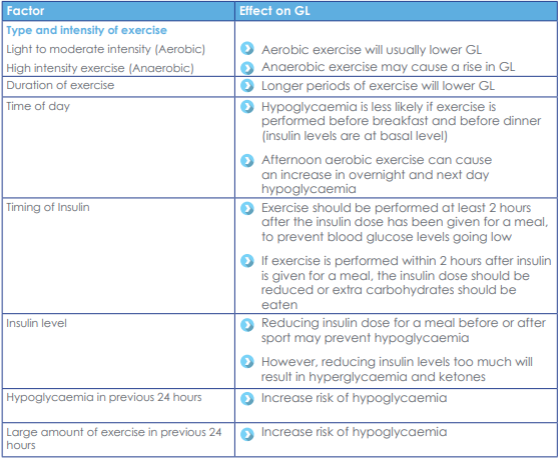
3. Different factors affect GL
10.10 Strategies for maintaining GL
The strategies needed to maintain your GL depend on the duration, intensity and type of exercise.
During exercise:
- Extra carbohydrates within 30 minutes before exercising.
- Reduce the bolus dose of insulin for the meal before exercise by 25 to 75 per cent for planned activity,
- Or, if you are on an insulin pump, you can reduce basal insulin rate by 20 to 50 per cent from 90 minutes before exercising and until exercise is finished
- Additional carbohydrate may be necessary during exercise
After exercise:
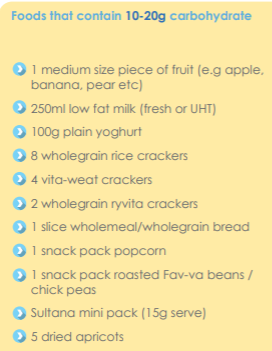
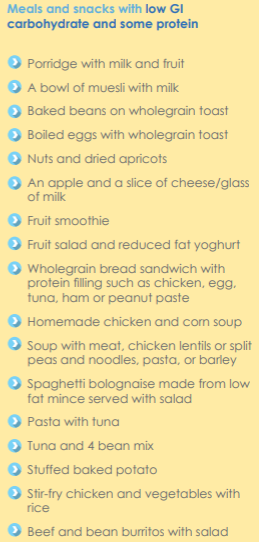
- Eat a meal or snack that contains carbohydrate and protein within an hour of finishing exercise to reduce risk of hypoglycaemia, aid muscle recovery and replace glycogen stores (see food table below)
- You can adjust the meal insulin dose to prevent hypoglycaemia
- If GL is <5mmol/L reduce dose by 50 - 75%
- If GL is 5-8mmol/L reduce dose by 25 - 50%
- If GL is 8-15mmol/L reduce dose by 10 - 25%
- If you are on an insulin pump, you can reduce the basal insulin by using a temporary basal setting that is 10 to 20% less than the usual basal rate for up to the first 12 hours after exercise.
- Glucose levels should be checked before going to bed and during the night after exercise.
10.11 Swimming
People with diabetes are encouraged to participate in swimming. Whether swimming for fun or competitively, at the beach or the pool, it’s important to be prepared. We recommend you swim with a companion or with supervision/support staff who are aware of your diabetes.
Swimming, as with any exercise, will lower your GL levels. Have ready access to your blood glucose meter, carbohydrate snacks and strips. Keep these in a Ziplock bag or other form of waterproof container. You can put this at the edge of the pool, or the end of the swimming lane if you are at the pool.
Make sure your fingers are dry before doing a finger prick as water on your skin may affect the GL reading.
Some insulin pumps are waterproof and can be immersed in water. However, we recommend that you do not use your pump while swimming. If you do wear a pump while swimming, please check that your cannula has not dislodged as moisture can reduce the adhesiveness of the cannula against your skin. Extra taping with a waterproof bandage over the cannula or ensuring bathers are fitted firmly against the skin, may prevent dislodging.
Remember to resume your pump if it is on suspend after swimming or any other exercise. Temporary basal reduction may be required.
CGMs are designed to stay in place during activities. You can add another layer of tape to the CGM. While swimming the CGM will not be transmitting data to your receiver. Remember to stop and keep track of your GL.
There are a few key points to remember:
- Discuss your bolus and basal insulin rates with your diabetes team
- Check GL before and after exercise
- During periods of prolonged activity (>30 mins), e.g. hiking or a sports carnival day, GL should be measured frequently
- Check GL after exercising as there is a possibility of delayed hypos
- Eat a carbohydrate snack before exercising if required
- Be prepared. Have ready access to your blood glucose meter, quick and long-lasting carbohydrate snacks and strips
- Stay hydrated (water is the best drink) before, during and after exercise
- Children should be supervised
- Exercise with someone who knows you have diabetes and can assist if necessary
- Learn from your patterns and responses to different activities
- Most importantly, exercise every day!