
Control IQ Sick Day Management
Hypoglycaemia Management
One of the main aims of Control IQ is to improve time in range (TIR) without increasing risk of hypoglycaemia.
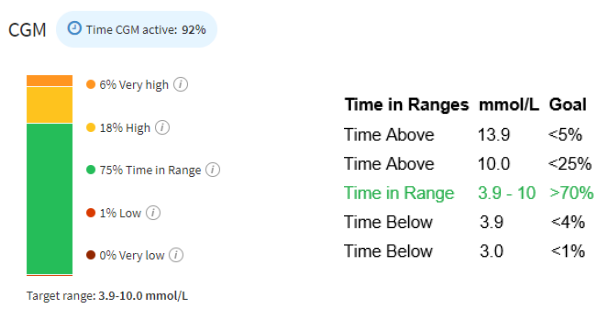
The Tandem T: Slim pump with Control IQ technology pairs with the Dexcom G6.
When Control IQ is turned on, it will decrease basal insulin delivery if:
- The system predicts that glucose levels are expected to drop below 6.25mmol/L in the next 30 minutes
OR
The system will suspend basal insulin delivery if:
- If the sensor glucose is predicted to be below 3.9mmol/L in the next 30 mins.
Hypoglycaemia is a BG level of 3.9mmol/L or less
If your sensor glucose level drops below 4 mmol/L whilst on Control IQ:
- treat with half your usual fast acting glucose amount, for example:

2. If the sensor glucose level remains below 3.9 mmol/L after 20 mins, repeat step 1.
3. If the sensor glucose is 4.0mmol/L or above, no further action is required. The insulin pump will resume basal delivery once it detects your sensor glucose levels rising again.
Remember, it is also recommended to check blood glucose levels with a finger prick if a person’s symptoms do not match the sensor readings. If you have any further queries, please do not hesitate to contact our team on 64561111 or pchdiabetestriage@health.wa.gov.au
Hyperglycaemia (High BGL) Management
Possible causes:
- Missed meal bolus- Auto Basal is not intended to manage significant highs, which can occur from missed meal boluses or highly underestimated carb intake.
- Meal Bolus given too close to the meal
- Correction bolus not given
- Flow of insulin interrupted:
- blockage or kink in the infusion set
- cannula bent or dislodged
- set not connected properly
- air bubble in the infusion set
- pump is disconnected/ suspended for too long
- Site not absorbing i.e., due for a line change
- Site infection
- Illness
- Stress
- Decreased activity
Problem solving:
- Bolus for all meals and double check carb counting.
- Bolus for meals 15 minutes before eating to match insulin dose with carbs eaten.
- If a meal bolus has been forgotten deliver a correction bolus as requested by the pump.
Increase in Automated Insulin
When using Control IQ, the pump will deliver an increase in basal insulin if the sensor is predicted to be above 8.9mmol/L. It will deliver an automatic correction bolus if the sensor is predicted to be above 10mmol/L. An auto correction is 60% of a manual correction.
When using sleep activity function the basal rates will increase when the sensor glucose is predicted to be above 6.7mmol/L. No auto corrections will be delivered during sleep activity.
Ketones
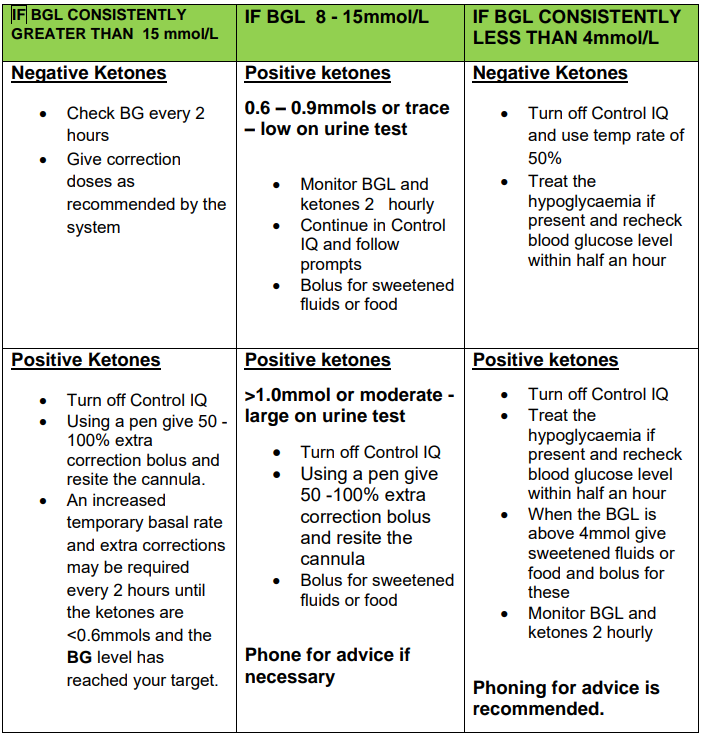
Check ketones if BGL > 15 mmol/L.
If positive for ketones, ≥ 1 mmol/L - More insulin is required.
Turn off Control IQ
Using a pen or syringe give an extra 50% to 100% of correction bolus (depending on level of ketones) and re-site the cannula.
Consider the use of an increased temporary basal rate once the cannula is re-sited.
Check BGL and ketones every 2 hours.
Return to Control IQ once ketones are negative and BGL stable.
Sick Day Management
General Points:
NEVER STOP INSULIN COMPLETELY AS THIS MAY LEAD TO KETONE PRODUCTION.
- Test blood glucose levels and ketones (regardless of BGL) every 2 hours.
- Patient to stay in Control IQ as much as they can by following pump prompts and giving corrections.
- If unable to give enough corrections to reduce high glucose levels may need to turn off Control IQ and use temporary basal settings from 150%
Ketones:
- Turn off Control IQ if ketones are present.
- Give insulin injection for ketones
- Stay in Manual Mode for 3 hours (duration of action of insulin) before returning to Control IQ
Exercise Management
For Aerobic Exercise which include sports and activities such as running, swimming, dancing, football, netball, basketball, kickboxing or bike riding your child may experience hypoglycaemia.
For Anaerobic Exercise which include sports and activities such as weight training, sprinting or jumping or any exercise that consists of short exertion and high intensity movement, may cause your child to have hyperglycaemia. In this case, it may be necessary to monitor BGL more frequently and give corrections if the system allows.
Response to exercise is very individual. To understand how different exercise and duration or intensity impacts your child’s glucose levels when using Control IQ, it is recommended to record strategies and observe the different outcomes.
A strategy to prevent hypos using Control IQ is to use the Exercise activity function which raises the treatment target range to 7.8 – 8.9 mmol/L and the suspension threshold to 4.4mmol/L.
Exercise Activity Function
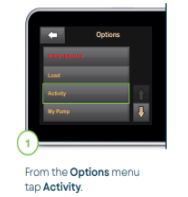
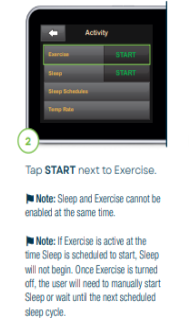
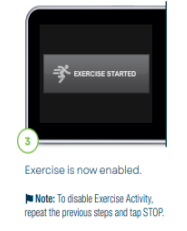
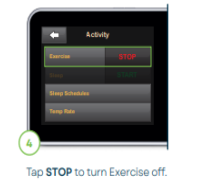
- Turn exercise activity on for 1-2 hours before exercise, depending on current glucose levels.
- The exercise activity can continue until 1-2 hours after exercise if glucose levels are trending low.
- Your child may need to use the exercise activity over night for up to 12 hours to prevent post exercise hypoglycaemia
- Consider under bolusing the meal just before sport for younger children.
If hypos occur even with use of the exercise function or for spontaneous exercise, consider these actions for your next exercise session:
- Suspend the pump during exercise. This will prevent the pump giving any auto corrections if you require a pre-exercise snack.
- Consider giving a carbohydrate snack immediately before exercise if glucose level is < 8.3mmol/L.
- If the carbohydrate snack is given more than 10-15minutes before exercise (when the pump is still on) without a bolus, the auto basal will increase and the pump may deliver an autocorrection to cover rising glucose levels which may cause hypoglycaemia during exercise.
- When in Control IQ we need to re-think how carbs are given before sport.
For any sport or activity consider how this has been managed previously and adjust based on the impact of auto basal and autocorrections.
REMEMBER: SUSPEND IF DISCONNECTING YOUR PUMP FOR LONGER THAN 15 MINS.
Meal management - Food Tips
Meal Boluses:
- Should be given at least 10 - 15 minutes before eating to optimise insulin action
- However,
- if BGL is 4.4 – 5 mmol/L bolus 5 minutes before eating
- If BGL is 4 – 4.3 mmol/L bolus just before eating
- Hypoglycaemia may occur if your child is not bolusing for meals early enough.
- This may occur if the bolus was delivered at the time of the meal or after they have started eating (depending on glucose levels).
- This is due to the auto basal insulin increasing to match the increasing sensor glucose reading from the meal.
- When the patient gives the bolus insulin for the meal in addition to the already increased basal insulin there is too much insulin on-board, this can cause hypoglycaemia.
Missed or forgotten bolus:
If meal bolus has been forgotten and
- Identified within 1 hour of eating enter 50% of carb intake and recheck in 1 hour.
- Identified more than 1 hour after eating give correction and continue to monitor hourly until target has been achieved.
Delayed or extended glucose rise after a meal:
Meals with higher fat or protein meals (that also have carbohydrates) may show a fall in glucose, post bolus, then an extended rise 2-5 hours later.
There are two ways to manage this:
- Enter the carbs before the meal and allow the Auto Basal to adjust as needed if there is a delayed or extended rise. This is a good option for a one-off meal.
- Give extra insulin and use the extended bolus feature. This is good option for a regular family meal that results in delayed glucose rises.
- Add 20% to the carb dose. i.e. if 40g of carbs add 10g. Total 50g bolus.
- Select extended bolus.
- Deliver Now: 60 to 70%
- Deliver Later: 30 to 40%
- Duration 1:30 to 2 hours
This method may require some trial and error to see which types of food need an extended bolus and the amount and ratio of insulin. Contact your clinic dietitian on the best way to manage with these types of meals.
Bedtime snacks
It is a good idea to refrain from giving your child a snack at bedtime, without bolusing, to prevent hypoglycaemia overnight. The Auto Basal will reduce to prevent a hypo from occurring if SGLs decrease. It may take a bit of getting used to, but you will gain trust in the system.
Fake Carbs
Sometimes it may seem like a good idea to manipulate the system by bolusing for fake carbs in order to give more insulin and bring SGL’s down faster, as the correction bolus may seem too conservative. However, it is best to work with your clinical team to optimise pump settings to manage hyperglycaemia.