
Iron Deficiency
Iron is a mineral that is found in a range of food. It helps transport oxygen around the body, making it essential for life. It is also important for brain development, growth and immune function.
Symptoms of low iron
If your child is not getting enough iron in their diet, they will use up their iron stores. If these are not replaced it can lead to iron deficiency anaemia. Symptoms of this include:
- feeling tired or faint
- getting sick often and not able to fight off infections
- changes in behaviour, such as disinterest in play
- decreased appetite.
Where is iron found?
The best source is haem iron which is found in animal foods. It is easily absorbed by the body. Try to include at least one serve in your child’s diet each day. Sources include:
- lean red meat such as beef, lamb and veal
- chicken, pork and turkey
- fish, tuna, salmon and shellfish
- offal meat such as liver and kidney.
Good sources - non-haem iron
This is iron found mainly in plant foods. It is not as easily absorbed as haem iron but is still important in your child’s diet. Sources include:
- eggs
- iron fortified breakfast cereals
- wholemeal or wholegrain bread and iron-fortified white bread
- legumes for example lentils, chick peas, kidney beans, four bean mix, baked beans
- tofu
- leafy green vegetables for example spinach, kale, broccoli
- dried fruit for example apricots and sultanas
- peanut butter and nuts (whole nuts not recommended under five years)
- seeds for example sesame
- hummus (chick peas) and tahini (sesame seeds)
Vitamin C improves the absorption of non-haem iron. Include vitamin C containing foods at the same meal. Examples include citrus fruit, kiwi fruit, strawberries, pineapple, capsicum, tomato, broccoli and snow peas.
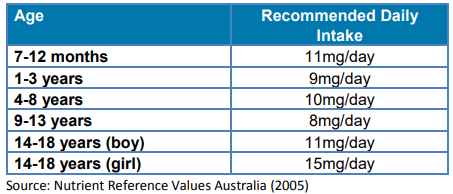
How much iron does your child need?
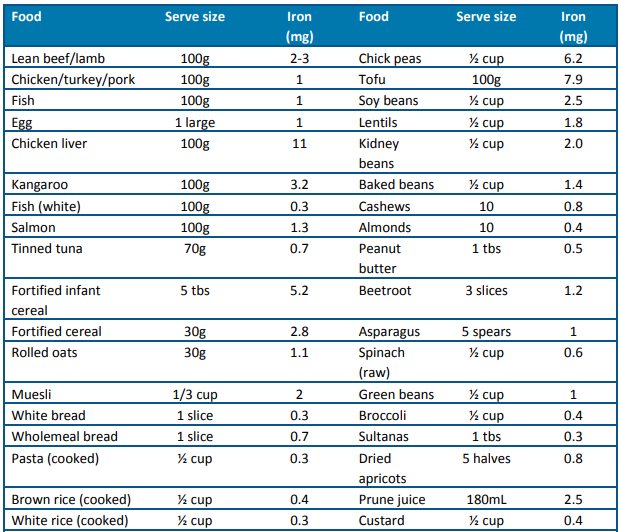
Iron content of food
Some ways to boost iron intake
- Serve red meat, chicken, fish, pork or eggs each day.
- Use sandwich fillings like tuna, ham, sliced chicken or egg.
- Choose a breakfast cereal with added iron (eg Weet-bix, baby rice cereal).
- Add fruit to help with iron absorption.
- Use wholemeal bread and pasta.
- Add legumes (for example lentils, chick peas or kidney beans) to soups, casseroles and stews.
- Spread nut butter or hummus on bread or crackers.
- Serve baked beans on wholemeal toast.
- Give dried fruit and nuts (children over five) as a snack.
Vegetarian or vegan
If your child is following a vegetarian or vegan diet, careful meal planning is needed to make sure they get enough iron. They will need to eat plenty of legumes, fruit, vegetables, ground nuts, seeds, soy products including tofu, wholemeal breads and cereals.
Iron blockers
Caffeine (tea, coffee and cola drinks) and unprocessed bran stop the body from absorbing iron and should not be given to your child.
Cow's milk
Drinking a large amount of milk can contribute to iron deficiency. This is because milk is a poor source of iron and can reduce your child’s appetite for other food. For children over 12 months, limit cow’s milk to less than 500mL per day. If your child is eating cheese and yoghurt, they need even less than this. As an example, a child aged 1-3 years can get enough calcium each day from one slice of cheese (30g) plus 100g yoghurt plus 150mL of milk.