NDSS - Version 5. 01 March 2023.
NDSS: Diabetes distress
A fact sheet on Diabetes Distress by NDSS.
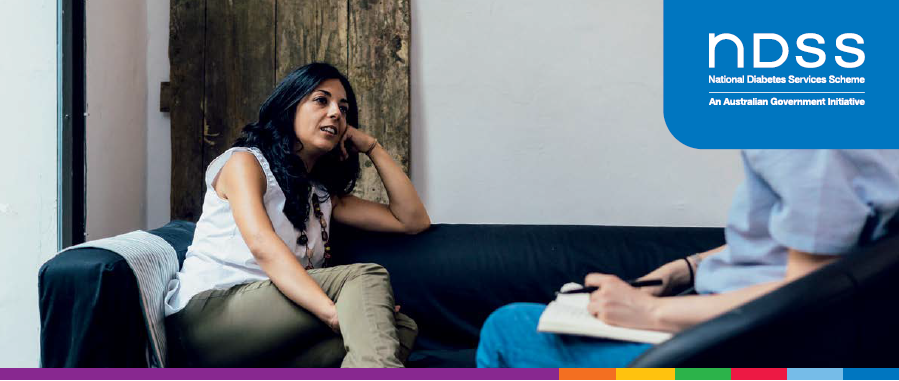
Diabetes can be really tough to live with. Sometimes people feel distressed, which can include feeling frustrated, guilty, sad, or worried. It is understandable if you feel this way from time to time – but you are not alone. There are many things that you can do to reduce your diabetes distress.
"I think the hardest thing was as soon as you start testing your sugars and you don’t watch them go down, that just becomes blow after blow every day. It’s not something you deal with every three months when you get your blood test result, it’s something you’re dealing with on a daily basis, so it’s taken me a long time to get used to doing sugar readings and accepting them.” - Marianne, 62, person with diabetes.
What is diabetes distress?
Diabetes distress is the emotional burden of living with and managing diabetes.
For example, you may feel:
- overwhelmed by the demands of living with diabetes
- concerned that you are ‘failing’ with your diabetes management
- worried about your risk of long-term complications
- frustrated that you cannot predict or ‘control’ diabetes from one day to the next
- guilty when your diabetes management gets ‘off track’.
Diabetes distress becomes a serious problem when these emotions start to affect daily life, including work, school, relationships and diabetes management. If severe diabetes distress is not managed, it can get worse over time. It may lead to ‘burnout’. This is when a person feels emotionally exhausted and overwhelmed by the demands of their diabetes. They try to cope with this by giving up on taking care of their diabetes.
If you experience diabetes distress, talk to your health professional. They will assess the problem and help you work out strategies to manage your distress.
What you can do
Whether or not you are experiencing diabetes distress, it is important to look after your emotional wellbeing.
Some of the following strategies may work for you; others may not, and that is okay. They may give you ideas about other things you could try.
Stop blaming yourself
Diabetes can be hard to manage, and there is never a perfect relationship between the effort you put in and the outcome. Sometimes, people feel like they are ‘failing’ with their diabetes. Remember, your blood glucose level is just a number, not a reflection of who you are.
- Let go of expectations that may be too high and focus instead on doing things you can achieve.
- Use phrases like ‘high’ or ‘low’ blood glucose levels, instead of ‘good’ or ‘bad’, to avoid thinking badly of yourself.
It is about finding the balance between managing diabetes well and living your life.
Start being kind to yourself
It is hard to take care of yourself when you are feeling down or frustrated. Being kind to yourself is a great way to improve your wellbeing. For example, take a relaxing bath, treat yourself to a massage and listen to music you enjoy.
When you feel distressed about your diabetes, you might also like to imagine what you would say to a close friend with the same struggles. Compare this to how you usually respond to yourself in these situations. Are you being harder on yourself than you would be on a friend? Follow the advice you would give to your friend instead.
Take a break
If you feel completely fed up with your diabetes, taking a break might help. While you cannot completely ignore your diabetes, taking a break means that you spend a little less time and energy on it for a short while (maybe a week or two).
Talk with your diabetes health professional before making changes to the way you manage your diabetes. Explain why you need a break and ask them to help you plan your break safely. They will be glad you asked.
Re-assess your goals
If you feel like you are not achieving your goals with your diabetes, consider setting one or two smaller goals to help increase your confidence. Getting some ‘easy wins’ may help you feel better.
For example, you might consider the following goal: 'To attend four appointments (one every three months) with my diabetes health professional in the next year'. This goal is specific and measurable, which is a good thing. It also needs to be realistic for you. Keeping your appointments will mean you get the support you need.
Get connected
Talking things through with others can be a big help. You might like to talk to your family or friends about how you feel and how they can support you.
It may also help to talk to others who understand what it is like to live with diabetes. It can be reassuring to know that other people face similar challenges and to share ideas about how to cope with them.
Read on to find out where you can access 'peer support'.
I think it’s that realisation that you’re not alone, that there are unfortunately quite a lot of other people around Australia who have got the same issues and face the same problems as you do day in and day out. It can give you, I guess, not a positive feeling but you know in the back of your mind, it’s okay, I’m not isolated, I’m not doing this alone.
Talk with a professional
The strategies above may give you some ideas about how to prevent or reduce diabetes distress, but they cannot replace professional help. It is always a good idea to talk about your concerns with a health professional.
Who can help?
Your diabetes health professionals
Your diabetes health professionals are there to help you with all aspects of your diabetes, including how you feel about it. If you feel comfortable, share your feelings with them — they will give you non-judgmental support and advice.
You may want to talk with your:
- general practitioner (GP)
- endocrinologist
- diabetes educator
- diabetes nurse practitioner
- dietitian.
Bring this fact sheet to your appointment to help get the conversation started. You will probably feel relieved after sharing your feelings, and it will help your health professional to understand how you are feeling.
- You might like to attend a structured diabetes education session. Learning more about diabetes can help overcome frustrations.
- There may be group education sessions in your area.
- Ask your health professional or contact the diabetes organisation in your state or territory for more information.
A psychologist
You might also like to talk to a psychologist. They will help you find ways to cope with the demands of diabetes.
Ask your diabetes health professional if they know a psychologist in your area who is familiar with diabetes.
- To find a psychologist near you, go to the Australian Psychological Society website at psychology.org.au.
Your GP can tell you if you are eligible for a Mental Health Treatment Plan to reduce the costs involved in seeing a psychologist.
More information and support
Diabetes online community (#DOC)
- Some people living with diabetes like to connect with other people living with diabetes for online peer support via Twitter. Many people with diabetes communicate via Twitter using #DOC or #OzDOC.
Peer support
- Go to the NDSS Adult Peer Support website peersupport.ndss.com.au to learn about peer support, hear from others living with diabetes, or search the directory of online and face-to-face peer support groups across Australia. • Read the NDSS fact sheet ‘Peer support for diabetes’.
Psychological support
- Go to ndss.com.au to search for the ‘When and how psychologists can support people with diabetes’ fact sheet.
Diabetes Australia
- Go to diabetesaustralia.com.au.
NDSS
- Go to ndss.com.au, email info@ndss.com.au or call the NDSS Helpline 1800 637 700.
Top tips
- Diabetes distress is the emotional burden of living with and managing diabetes. Diabetes distress becomes a serious problem when these emotions start to affect daily life, including work, school, relationships and diabetes management.
- Being kind to yourself is a great way to improve your wellbeing.
- Your diabetes health professionals are there to help you with all aspects of your diabetes, including how you feel about it. If you experience diabetes distress, talk to your health professional.
- You might also like to talk to a psychologist. They will help you find ways to cope with the demands of diabetes.